Increase Volume of Reading to Increase Child's Ability to Read

Reading is an incredibly important part of your child's emotional and intellectual development. Strong reading skills set your child up for success later on in life in many means.
- Your child volition learn new words and amend both their language association skills and the fundamentals of language
- Reading increases your child'due south ability to learn across all subjects, non but in language and reading
- Hearing and reading stories helps your kid to master concepts of logic, judgement, and cause and effect relationships
- Reading helps your child to enhance their power to concentrate and develop a longer attending bridge.
Many parents read stories to their children when they are too young to read for themselves. As your children go older, instilling a beloved of reading can be crucial to their language skills, independence, and emotional development.
As your child is learning to read, or if they struggle with reading on their own, there are many things that you lot as a parent can practice to help better their abilities.
Non sure where to start? Try these 7 effective ways to increase your kid'due south reading skills.
one. Establish a regular reading routine
Research indicates that setting aside time daily to read to and with your kid can essentially increase their reading abilities in many areas, including:
- Reading comprehension
- Vocabulary skills
- Learning to recognise words that they already know
- Learning to sound out unfamiliar words
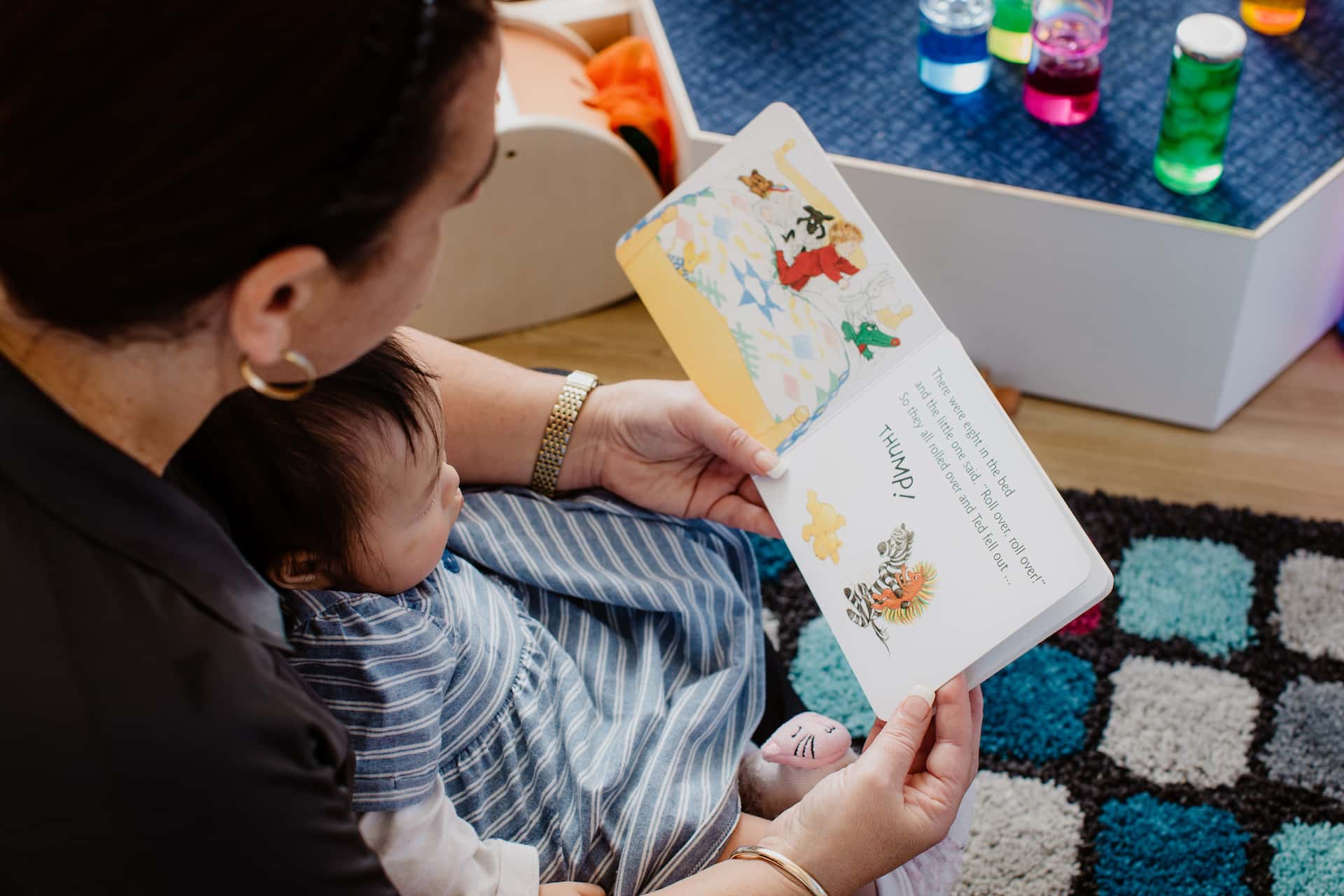
If your child has not yet learned to read, incorporating a daily story time routine into their schedule will instil the importance of reading that they will hopefully continue to appreciate as they learn to read on their own.
As your kid does acquire to read on their own, you lot can continue your daily or nightly story time together. Gradually shift the reading responsibilities to your child so that they are reading to you instead of the other way around. This volition encourage them to read without your assist, but allow them to exercise so in an surround where yous are nonetheless able to help them to decipher unfamiliar or difficult words.
two. Encourage your child to read on a regular basis
At that place are ii very effective ways to encourage your child to read regularly. One is to make books available everywhere in your home. Lure your kid into stories by having books on shelves or in baskets in rooms throughout your home.

Having books at their reading level available in the automobile, in the bathroom, adjacent to their bed, and even in the living room adjacent to the Goggle box will betoken to your child that reading is of import and easily accessible.
Some other manner to encourage your child to read is to atomic number 82 by example.
Parents are the ultimate role models for their children, and yours are likely to emulate the behaviour that you display. If your child sees you reading before bed every dark so they are more likely to do the aforementioned. Likewise, when your child sees you lot reading for your own pleasure, they will see firsthand that reading is virtually enjoyment and not simply about learning.
3. Help your reluctant reader to find books that they love
If your child appears to be uninterested in reading, information technology may not be because they do non like to read. The source of the trouble could but exist that they practice not like to read the books that they have.
Finding the right genre or type of story could exist the primal to finally sparking your child'due south interest.
Try exposing your child to many different types of stories. The more interested your kid is in the subject affair inside of a book, the more excited they volition be to read it.
Mysteries, science fiction, and adventure stories are specially popular with young boys and girls with adventurous imaginations. If your child is wildly curious nigh animals, outer space, or construction machines, endeavor providing them with material about those subjects.
4. Utilize reading examples outside of books
Not all reluctant readers can exist encouraged to read books. Nonetheless there are plenty of other means to ensure that they go on to read. Your child does not have to open up a book to heighten their reading skills – there are plenty of things to read in the world around them!
Here are a few techniques that you tin try to encourage your kid to improve and utilise their reading skills:
- If your child asks to go run across a movie, inquire them to look up the movie times for you
- If your child loves to help you lot brand dinner, let them select a recipe from a favourite melt book and read the steps to you. (If you are modifying the recipe, this is also a bang-up mode to help your child to amend their matching skills!)
- Encourage your child to read road signs, weather reports, shop hours of operation, or emails from other family unit members.
Incorporating reading into activities that your child loves and showing them the ways in which reading is integral to their everyday life will encourage them to proceed to improve their skills, fifty-fifty if information technology does non aid them to enjoy reading books.
v. Stay involved in your child'south reading education
Teachers may non always know when your kid first begins to fall behind in their reading skills. Some children are able to mask their difficulties, peculiarly in group settings, and may be too embarrassed to ask for help even if they know that they need it.
Don't expect until the problem becomes serious to take action. Staying involved and monitoring your child's progress on a regular basis can help you to stay ahead of and potential reading issues before they surface.

Accept the fourth dimension to read stories with your child, and use those moments to discern whether your kid struggles to recognise and sound out words or to use context clues to determine the meaning of any words that they practise not know. As your child asks questions about the story to see if they are able to cover the material.
If you practise feel that your child'south reading skills could exist improved, schedule a meeting with their teacher to make them aware of the potential problem and to come upward with a solution to make improvements if necessary. Parents, teachers, and children can all work together to identify learning gaps and make improvements.
vi. Never surrender on your child
With constant attending and care, some struggling readers are able to bring their skills up to a level that is appropriate for their year. Other children may proceed to struggle with reading into primary school or beyond.
Most of the strategies in this post are specifically geared to younger children. Notwithstanding if your primary schoolhouse or secondary schoolhouse aged child still struggles with reading comprehension, linguistic communication skills, or spelling and vocabulary, know that at that place are still resources available to you to help meliorate their skills.
When Kids Can't Read – What Teachers Can Practise is specifically written for educational professionals, simply the strategies independent therein can be useful to you as a parent as well.
This volume breaks down reading skills into manageable components, and outlines applied strategies that can be utilised to strengthen those components. It likewise helps to identify habits that "dependent readers" (students who are unable to effectively read without aid) rely on and how to decrease reliance on those habits.
7. Recollect that every child is dissimilar
This seems like mutual sense, but as a parent it is like shooting fish in a barrel to allow yourself to be frustrated with your child's perceived lack of "adequate progress," fifty-fifty if they are learning at a perfectly appropriate pace for their age.
The fact that your oldest child could read by historic period five does non mean that your younger kid should be expected to do the same. Each kid's brain is wired differently, and their skillsets will accelerate and better at a step that is specific to the way that they interact with the earth.
The factors and strategies outlined in this postal service are largely within your control as a parent. Nevertheless, the way that your kid's brain develops is likewise contingent on factors that you cannot control. Every child develops at a unique pace.
Think that your perception that your kid is "falling behind" may not exist accurate. If you lot believe that your child needs assist with their reading skills, work closely with their instructor to monitor their progress and exist willing to participate in strategies to improve their skills if necessary.
Above all, remember this: if your child truly does struggle with reading, the all-time thing that you tin do is to support them as they strive to meliorate. If your kid feels embarrassed or aback of their difficulties then they will be less comfortable asking for help.
Reading is an essential component of your child's learning and evolution. Helping them to meliorate their comprehension, literacy, language, and spelling skills will set them up for future success. Don't be agape to ask for help, but know that there is plenty that you tin can do on your own to help your child learn and grow.
Sources:
http://weblog.earlymoments.com/why-reading-to-children-is-so-important/
www.readingrockets.org/helping/target/comprehension
blog.enroll.com/post/Each-Childs-Brain-Develops-at-a-Different-Pace
world wide web.heinemann.com
Source: https://www.petitjourney.com.au/7-effective-ways-to-increase-your-childs-reading-skills/
0 Response to "Increase Volume of Reading to Increase Child's Ability to Read"
Post a Comment